A little (second) life
Tracey Emin's boring bloodletting
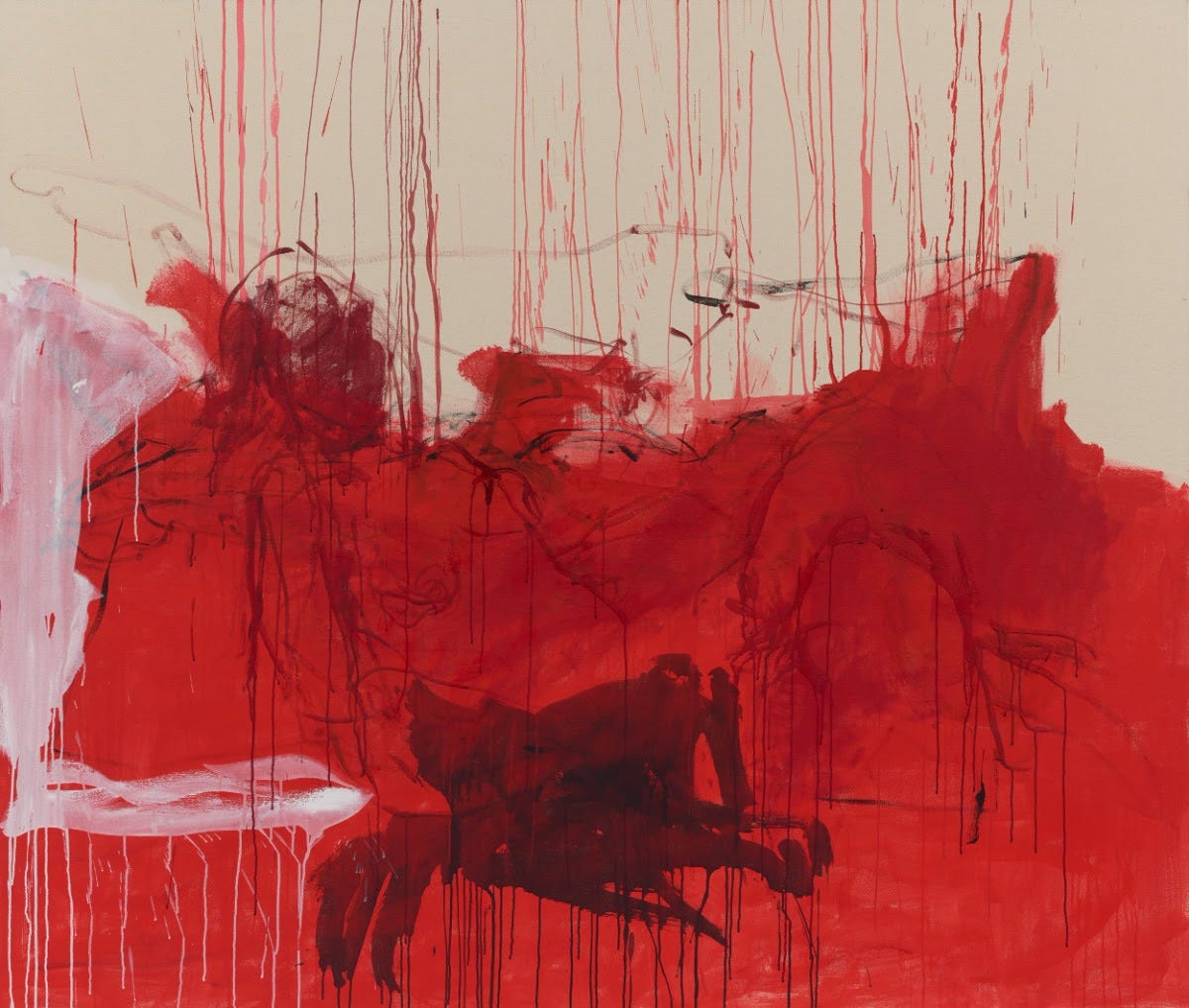
Tracey Emin’s new show, A Second Life, at the Tate Modern has opened to the familiar swell of publicity that has surrounded the artist since she first showed My Bed nearly 30 years ago. The reviews have been, to put it mildly, overwrought: “you will come out the other end feeling you’ve been in an emotional tumble dryer”, “a show that gets under your skin and into your bowels”, “like walking in on [Emin] crying, naked, sobbing and snotty” (!). The language used to describe Emin’s work – breathless and corporeal, with an undercurrent of gendered condescension – has become part and parcel of her confessional practice. Her art has drawn on abortion, sexual violence, illness and the detritus of intimate relationships – experiences rendered with a bluntness that was once genuinely destabilising. Yet familiarity alone cannot explain why the discourse around her remains so predictable.
The pattern is not confined to the gallery: in 2026, much cultural criticism has drifted into the realm of experience reporting. See the praise received by Chloé Zhao’s dreadful Oscar-favourite Hamnet. In it, a sweaty, screaming Jessie Buckley grieves the death of her child in one of the more blatant “give-me-an-Oscar” performances in recent memory. Buckley is excellent, her Oscar all but secured, but the film exists as a kind of misery endurance test, grief-porn attached to remarkably drab, incurious filmmaking. Even as the emotional voltage hits full throttle in the film’s climax, nothing shapes or complicates it; feeling is simply presented as proof of seriousness. As I shuffled out of my screening, dry-eyed, to a soundtrack of wailing audience members, I was left with the same question that has long shadowed discussions of Emin’s work: does intensity, on its own, amount to artistic achievement?
Both cases reveal a feedback loop: the audience consumes emotional bloodletting, the critics dutifully report on it and the substance of the work recedes ever further from view. To be moved, preferably to the point of collapsing into a blubbering puddle, is to have understood. The exhibition title proposes a deepening of Emin’s practice after weathering a particularly aggressive form of bladder cancer, and the show includes a hallway of stark, albeit artless photographs of her surgery. But if there are substantive differences between her paintings from the early 2000s to now, they are difficult to see in this not-a-retrospective. Her visual grammar is unchanged: abstracted forms rendered in splashy acrylic lie supine, suspended somewhere between declaration and collapse. Emin’s apparatus of hype and celebrity, once energised by New Labour’s cultural politics and the neoliberal turn in the art market, continues to structure what audiences see, what critics report, and what is remembered, even as the work and the ideology that underpinned it yield diminishing returns.
Notable, too, that barely a decade ago Emin was roundly castigated for voting Conservative, unwilling to pay the 50% rate of tax, as though fiscal self-interest were an aberration rather than a founding principle of the YBA scene. This was, after all, a movement incubated by Charles Saatchi, advertising magnate and master of monetised provocation. But the art world’s memory, as ever, has proved conveniently short.
I have no doubt the exhibition will be a success; pictures of massive queues from the opening abounded on my social media yesterday. Yet the times are changing: the infrastructure that upheld Emin and her YBA cohort – a tightly networked circle of dealers, institutions, and journalists – might have been present in full force at Wednesday morning’s opening, but outside this rarefied bubble, it exists largely as nostalgia. Meanwhile, culture is already oversaturated with commodified self-disclosure: reality TV, autofiction and vlogging have all normalised public exposure of intimacy, grief and trauma. Emin’s project might have worked too well. The real question is not whether A Second Life moves us, but whether it demands anything more than that we be moved – or indeed – why?
Matteo Pini
MORE IN YOUR TANK
BUY HERE
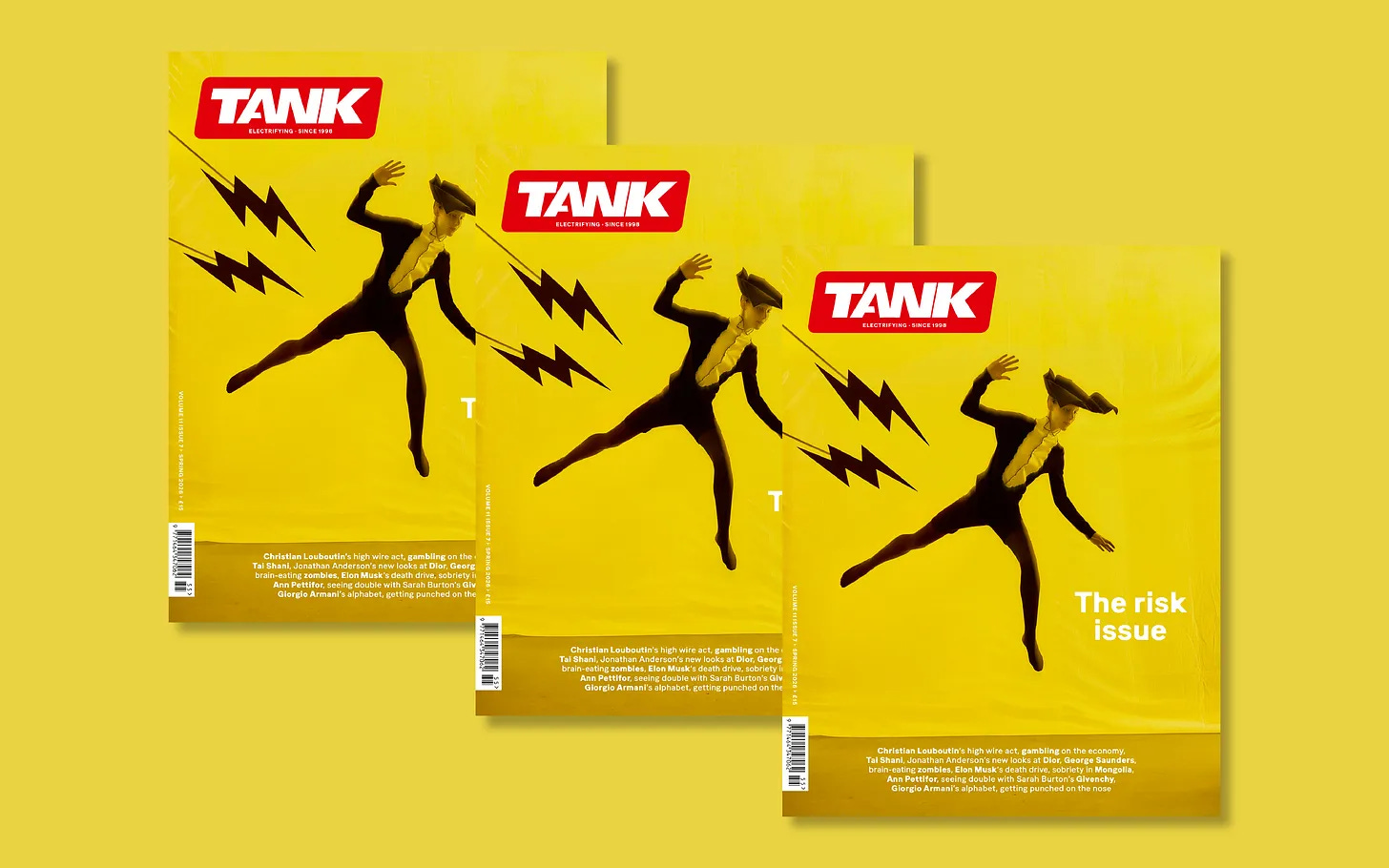
The risk issue is now on the shelves! Buy yours today for 300+ pages of features, fashion, art and interviews, all focused on our risky world. From artistic risk to the “global casino” of international finance to Elon Musk, we examine all forms of risk and what we might be able to do about them.
SEE HERE
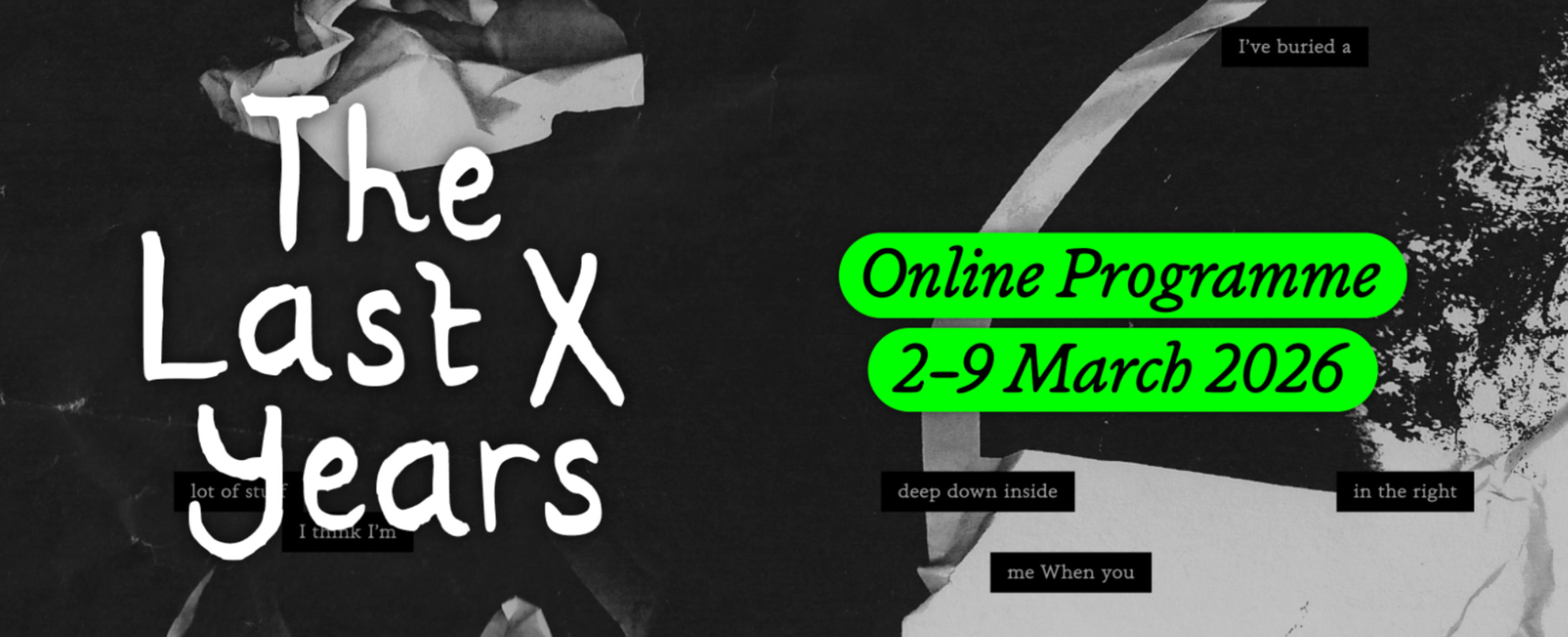
The first installment of Artangel’s The Last X Years Online Programme launches next Monday at 7pm GMT. Artist Caroline Sinders will be joined by educator and researcher David Carroll and journalist, artist and filmmaker Kari Paul in a discussion on the intended and unintended consequences of digital campaigning and the role of technology in global elections. Book your free place here.